

JavaScript obfuscation is the process of transforming readable JavaScript source code into a functionally equivalent version that is significantly harder for humans to understand, reverse engineer, or tamper with. Obfuscated JavaScript preserves the original behavior of the code while making it difficult for attackers to analyze the logic, extract sensitive data, or copy proprietary algorithms.
Common JavaScript obfuscation techniques include:

Not all JavaScript obfuscation tools are equal. When evaluating JavaScript obfuscation tools, look for:



While other online obfuscators provide basic functionality, PreEmptive offers:

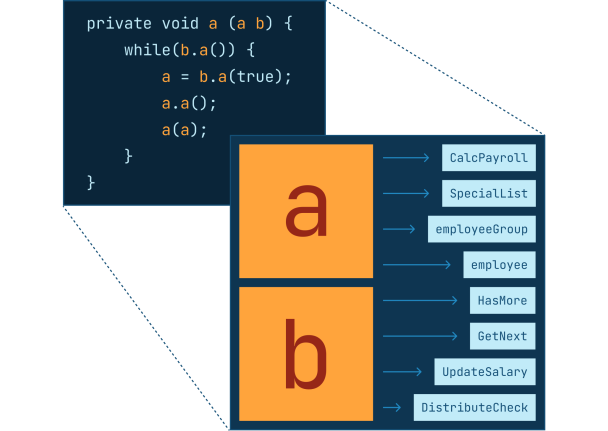
JSDefender applies multiple layers of transformation to your JavaScript, making it significantly harder to read, reverse engineer, or tamper with—while preserving full functionality for your users.
Yes. PreEmptive offers a above that lets you test selected protection techniques without signing up. You can also start a free JSDefender trial to evaluate the full product in your development environment.
The online demo lets you experiment with the protection options available in its interface. The full JSDefender product provides a broader, configurable set of protections for production builds, including control-flow transformation, declaration renaming, function reordering, string and literal protection, tamper detection, debugger defenses, domain locking, and date locking.
JavaScript obfuscation is designed to preserve the application’s intended behavior while changing how its code is structured and represented. As with any build transformation, you should test the protected output before deployment. Applications that use dynamic code evaluation or unusual framework behavior may require configuration adjustments.
JSDefender protects browser-based and Node.js JavaScript, including code produced by modern frameworks such as React, React Native, Angular, Vue, Next.js, Nuxt, and Remix. Because supported versions and workflows evolve, consult the latest JSDefender documentation when evaluating a specific framework or build configuration.
You can run JSDefender through the JSDefender CLI or integrate it with supported bundlers. This allows teams to apply protection automatically during CI and production builds instead of processing each release manually.
